What happened to Xwótqwem is not an isolated case. It fits a well-documented national pattern that scholars call toponymic extraction, the colonial practice of absorbing Indigenous place names into settler geography while severing the connection to Indigenous peoples and languages.
Across the United States, Indigenous words name states, counties, rivers, mountains, and cities. Most Americans encounter these names daily without any awareness that they are speaking Indigenous languages, or that the peoples who created those words are still here.
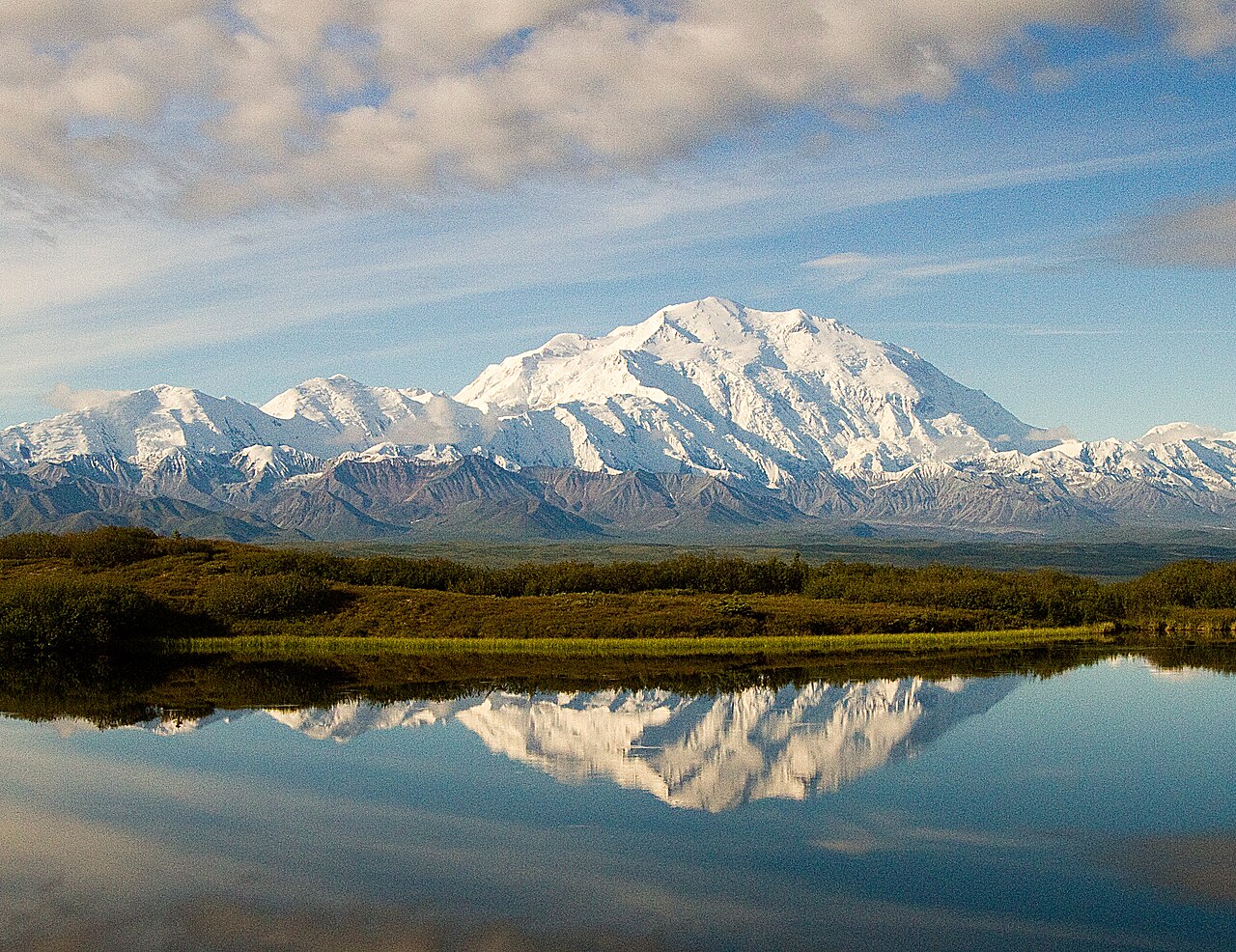
Denali / Mount McKinley (Alaska)
The Koyukon Athabascan name Denali (“the high one”) was replaced in 1917 by the name of President William McKinley, who never visited Alaska. Alaska recognized the Indigenous name in 1975. The Obama administration restored it federally in 2015. A Trump executive order reversed this in January 2025, prompting bipartisan legislation from Alaska’s senators to restore “Denali” again. Polls show Alaskans favor the Indigenous name 2:1.
The Denali case shows how toponymic extraction is not just historical. It is actively contested. A mountain’s name became a political football, with the people who named it thousands of years ago treated as one stakeholder among many.
Kuwohi / Clingmans Dome (Great Smoky Mountains)
The Cherokee name Kuwohi (ᎫᏬᎯ, “mulberry place”) replaced a name honoring a Confederate general. The Eastern Band of Cherokee Indians petitioned the U.S. Board on Geographic Names, which voted unanimously to restore “Kuwohi” in September 2024.
This case is instructive: the Cherokee people initiated the change, led the petition process, and the federal board responded. Indigenous agency drove the outcome.
Mount Blue Sky / Mount Evans (Colorado)
The peak was named for John Evans, the territorial governor who authorized the 1864 Sand Creek Massacre of 230+ Cheyenne and Arapaho people. The Board on Geographic Names voted 15 to 1 to rename it Mount Blue Sky in September 2023. Cheyenne and Arapaho Governor Reggie Wassana said: “You don’t celebrate somebody by putting their name on a mountain” when they authorized mass killing.
The numbers
A 2022 study by Bonnie McGill and colleagues in People and Nature (Wiley) reviewed 2,000+ place names in 16 U.S. national parks and found that names commemorating colonial violence outnumber those honoring Indigenous peoples by more than 2:1. They identified 214 appropriated Indigenous place names and 205 replacement names that erased Indigenous names entirely.
Secretary of the Interior Deb Haaland (Laguna Pueblo), the first Native American Cabinet secretary, created the Federal Advisory Committee for Reconciliation in Place Names in 2021 and led the removal of the derogatory term “squaw” from 650+ federal land features.
What makes Whatcom different
What distinguishes the Whatcom case from Denali, Kuwohi, or Mount Blue Sky is that the Indigenous word was never fully replaced. It was anglicized and hollowed out. “Whatcom” is Xwótqwem with the consonants filed down and the meaning stripped away. The word persists everywhere (on road signs, college letterhead, festival banners) but the languages that formed it are critically endangered, and most people who use the name daily have no idea they are speaking Nooksack and Lummi.
There is no renaming campaign needed here. The name is already Indigenous. What’s needed is restoration: restoring the word’s phonetic fullness, its precise meaning, and its connection to living Indigenous communities. Not as a monument to the past, but as an act of linguistic and cultural repair in the present.
That repair starts with how we use the word. The Language Sovereignty page lays out what ethical engagement looks like in practice.
Continue reading: Language Sovereignty, on how to work with Indigenous communities, not just borrow from them.