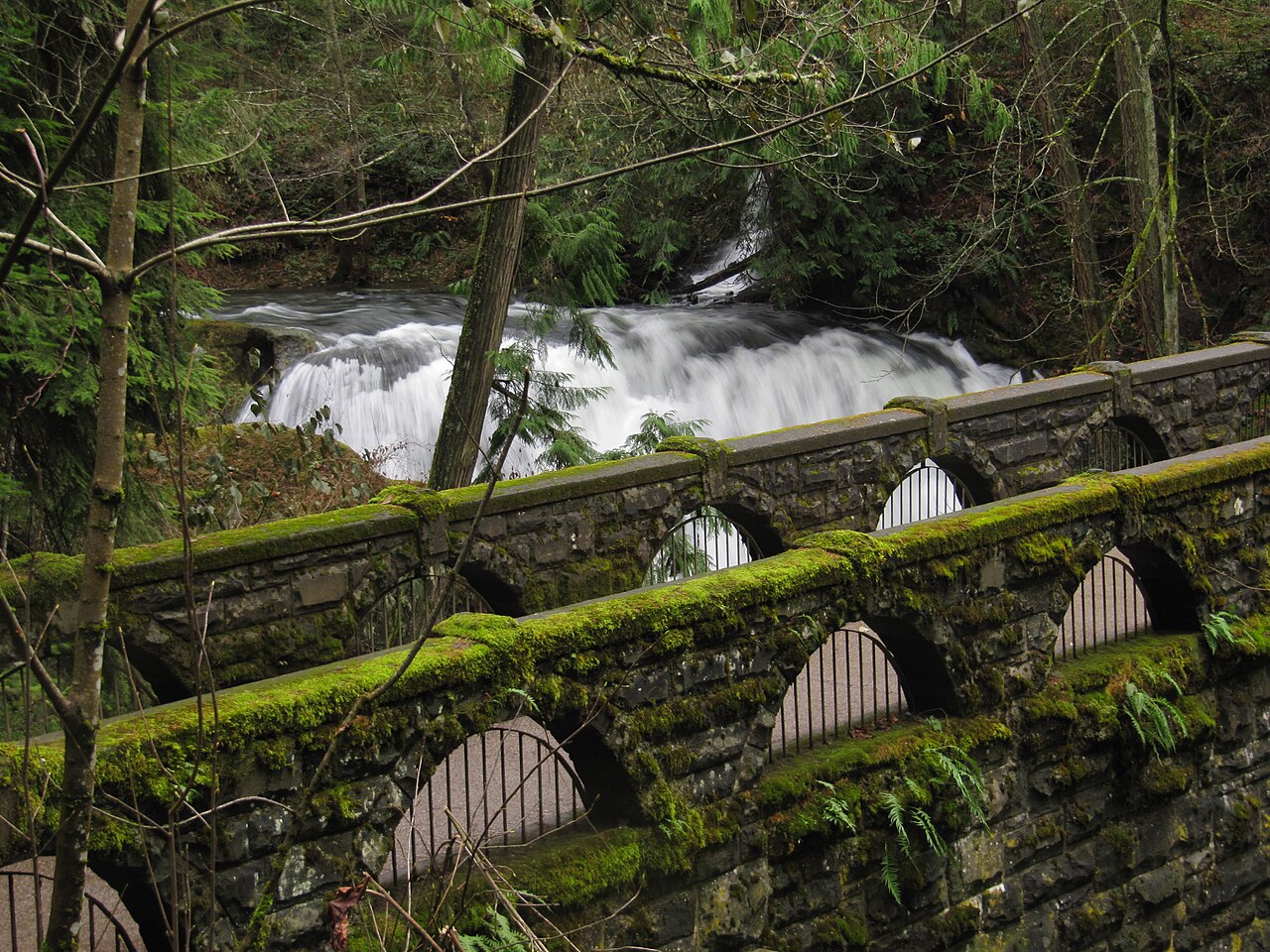
“The sound of water splashing or dripping fast and hard.” That is Xwótqwem, or QwotQwem, the Coast Salish word buried inside the name Whatcom.
You know this word. You just don’t know you know it.
Every time you say “Whatcom” you are speaking a Coast Salish word. The county, the creek, the falls, the lake, the college: all of it. Settlers flattened the consonants and stripped the meaning. Still, the word persists. It is Xwótqwem in Nooksack (Lhéchalosem) and QwotQwem in Lummi (Xwlemi Chosen). The word is onomatopoeic, because it captures the sound of a waterfall crashing fast and hard into the sea. That waterfall once plunged straight into Bellingham Bay, at the mouth of what is now Whatcom Creek.
In fact, most people who use the name daily have no idea they are speaking Nooksack and Lummi. So this site exists to change that.
What does “Whatcom” mean?
Whatcom is not an English word. It is Xwótqwem in Nooksack and QwotQwem in Lummi. Galloway and Richardson’s entry #133 records the meaning precisely: “sound of water splashing or dripping fast and hard.” It named one specific place, the lower falls on Whatcom Creek, where the water once fell straight into Bellingham Bay. The full linguistic record.
Is “Whatcom” a Lummi word or a Nooksack word?
Both, and the question carries a mistake inside it. Xwótqwem is Nooksack (Lhéchalosem). QwotQwem is Lummi (Xwlemi Chosen). They are cognates in two Central Coast Salish languages, and both peoples camped and fished at the creek mouth. The word crossed a linguistic boundary because the place did. Sources that pick one nation are usually repeating a settler shortcut. Two nations, one place.
Does “Whatcom” mean “noisy water”?
Not quite. “Noisy water” is the short version, and it is the one on the county website, in tourism copy, and at the Port of Bellingham. It is not wrong. It is thin. Xwótqwem is onomatopoeic: it carries the particular sound of water falling fast and hard, not the general idea of noise. Who uses the short version, and how.
Where does the name “Whatcom” come from?
From Lummi Chief Chow’it’sut, who in December 1852 directed Henry Roeder and Russell Peabody to the falls at “What-Coom” and gave them permission to build a mill there. The Washington Territorial Legislature named the county on March 9, 1854. The Treaty of Point Elliott, which ceded the land, was signed on January 22, 1855. The county carried his people’s word for ten months before the legal machinery of dispossession existed. How the name traveled.
Why this site is QwotQwem and not Xwótqwem
This website’s URL uses the Lummi spelling, QwotQwem. That is the form we met first, through Children of the Setting Sun Productions’ 2023 art installation and through the Lummi community’s public use of the word. At the time, we did not know that linguistic scholarship treats the Nooksack form, Xwótqwem, as the basis of the documented place name system. We learned that later, through the research presented here, especially the work of Brent Galloway and Allan Richardson with Nooksack elders.
Both forms are real. Nooksack and Lummi are Central Coast Salish languages, and both peoples used the creek mouth as a seasonal fishing camp. Each has cultural legitimacy in naming this place. This site honors both spellings, and it is honest about how our own understanding changed. That honesty is part of what we argue for on the Language Sovereignty page: when you learn something you did not know, you say so.
What you’ll find here
The Word
The full linguistic story of Xwótqwem / QwotQwem: where it comes from, what it precisely means, what “noisy water” flattens, and the scholars and elders who preserved it.
The Place
The waterfall, the creek, the camp at the creek mouth. How the word traveled from Indigenous toponym to settler settlement to county name, without consent, and a full year before the treaty that dispossessed the people who named it.
Who Profits from “Noisy Water”
The translated meaning of this word has become a branding device for festivals, publications, and civic organizations in Whatcom County. Who uses it, who credits Indigenous communities, and who doesn’t.
The Pattern
Whatcom is not an isolated case. Across the United States, Indigenous place names have been absorbed into settler geography while the connection to Indigenous peoples is severed. Denali, Kuwohi, Mount Blue Sky, and the scholarship documenting this national pattern.
Language Sovereignty
You want to use an Indigenous word, name, design, or cultural reference in your project, business, or event? Here’s what that actually requires. Who to contact, what to ask, what consent looks like, and what the difference is between appropriation and ethical engagement.
Sources
Every claim on this site is sourced. Full bibliography of the linguistic scholarship, historical records, tribal publications, and news coverage that inform these pages.
“People forget Whatcom is a Lummi word. We need to remind them we’re still here.”
Troy Olsen, Lummi fisherman, 2020